
01
Deep Time
Columbian mammoth bones lying as they were found. The only such nursery herd recovered in North America.
Everything else followed from that.
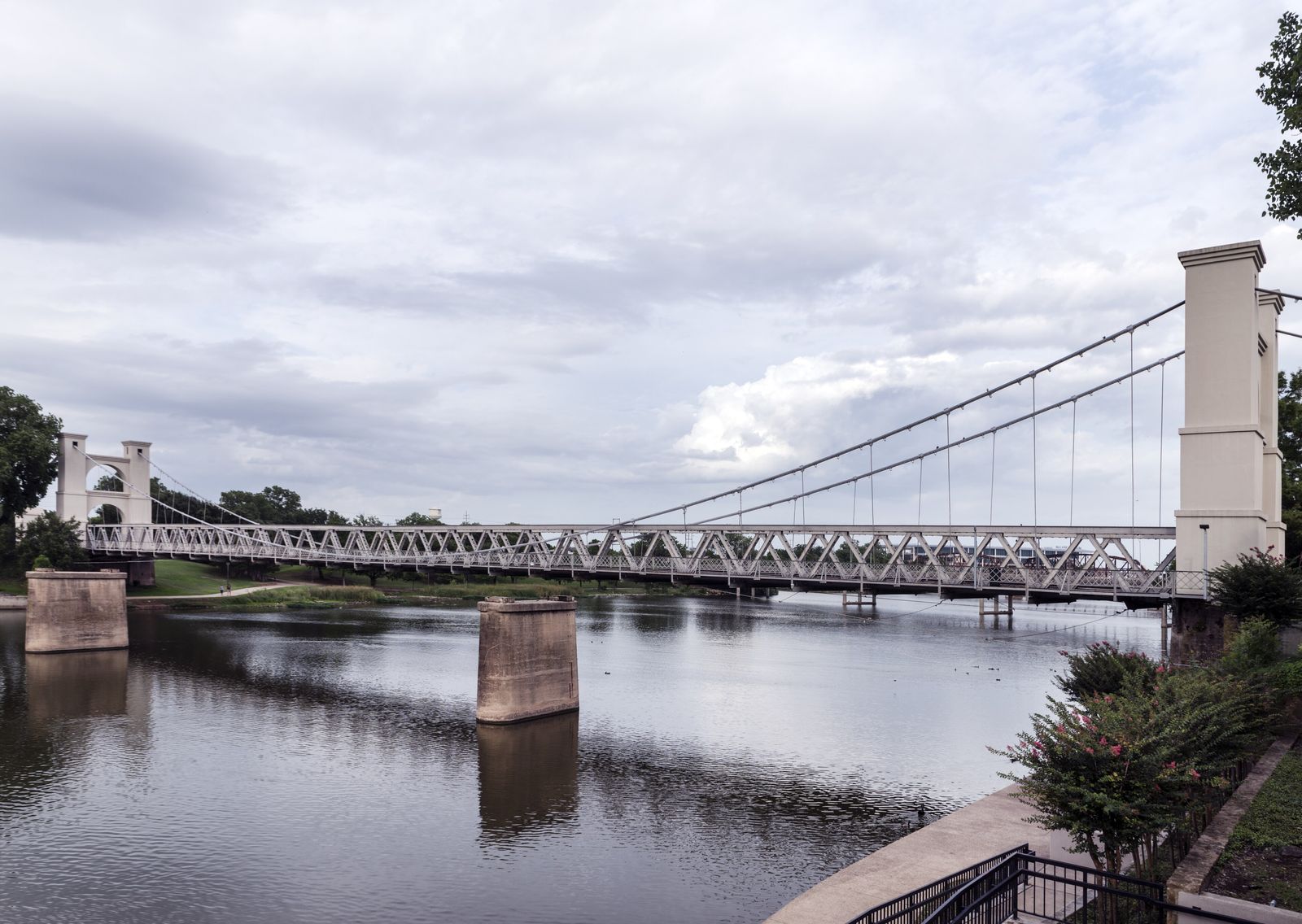
The Wichita farmed this bottomland and built their village at the crossing, on the ground this museum stands on. The Republic of Texas held its treaty councils downstream at Tehuacana Creek. Drovers pushed longhorns over the ford, and later over a suspension bridge built to charge them a toll for it. A railroad came and met the river.
From 1849, every decision about what kind of place this would be was made within sight of that crossing.

They have never been assembled
into a single route.
Now they are.
Start at the Taylor Museum
In 1824 Thomas Duke rode up on a Waco Indian village standing on this exact ground.
Archaeologists have since worked that site on this campus and recovered pipe stems, trade beads, pottery sherds, and charred seeds. The Brazos and the Bosque meet a short way off. Everything on the map you are about to open happened outward from this spot.
The Helen Marie Taylor Museum of Waco and McLennan County History is the county's history museum. One chronology, all of it, with no community set apart in a room of its own.

The Taylor Museum holds the whole county.
The treaty and the ledger, the emancipation and the Cotton Palace, the tornado and the ballot, the record Waco framed and the record it kept anyway.
The Crossroads
Passport
Pick one up at the front desk.
Eight routes. One county.
How it works
Pick one up at the Taylor Museum front desk, or load the digital version on your phone. Both work. Most people carry both, because the paper one is the souvenir.
Eight routes cross the county. Take one end to end, or build your own. Every stop on the map comes with directions, hours, and a reason worth the drive.
| Stamps | Rank | What you get |
|---|---|---|
| 5 | Scout | Enamel pin, and you earned it |
| 10 | Drover | Pin, patch, and a discount at the Taylor Museum store |
| 15 | Trail Boss | A numbered challenge coin struck for the year, your name in that year's register, and an invitation behind the scenes into the collections |
Every finisher signs the register. One volume a year, kept in the lobby, where the shelf grows.
One Saturday a year, every anchor site on the map runs free or discounted, every route runs guided, and the new stamps drop.
The eight routes
Columbian mammoth bones lying as they were found. The only such nursery herd recovered in North America.

The village, the fields, the treaties, and the removal. In 2014 Wichita leaders returned to correct the marker and say it right.

Trading posts, the Chisholm Trail, the 1870 suspension bridge, and the railroad that turned a river town into a market.

Eleven freedmen's colonies, and what freed families built in East Waco. This route also carries 1916, and the record is presented as it occurred.

The man who platted Waco was the son of Sephardic Jews. The first merchants, the city's first circulating library, two congregations.

Artesian water, a soft drink mixed at a downtown drugstore in 1885, cotton mills, thirteen million bombs, and Waco's first H-E-B.

Rangers, a 1902 Beaux-Arts courthouse, and a county's long argument with itself about what justice is.

May 11, 1953. Downtown flattened in minutes, and every decision the city made afterward about what to raise and what to clear.

Go find out what crossed here.
Enter the map49 visitable sites shown on the map · 8 routes · one county